Why Arbetsförmedlingen is highlighting education now
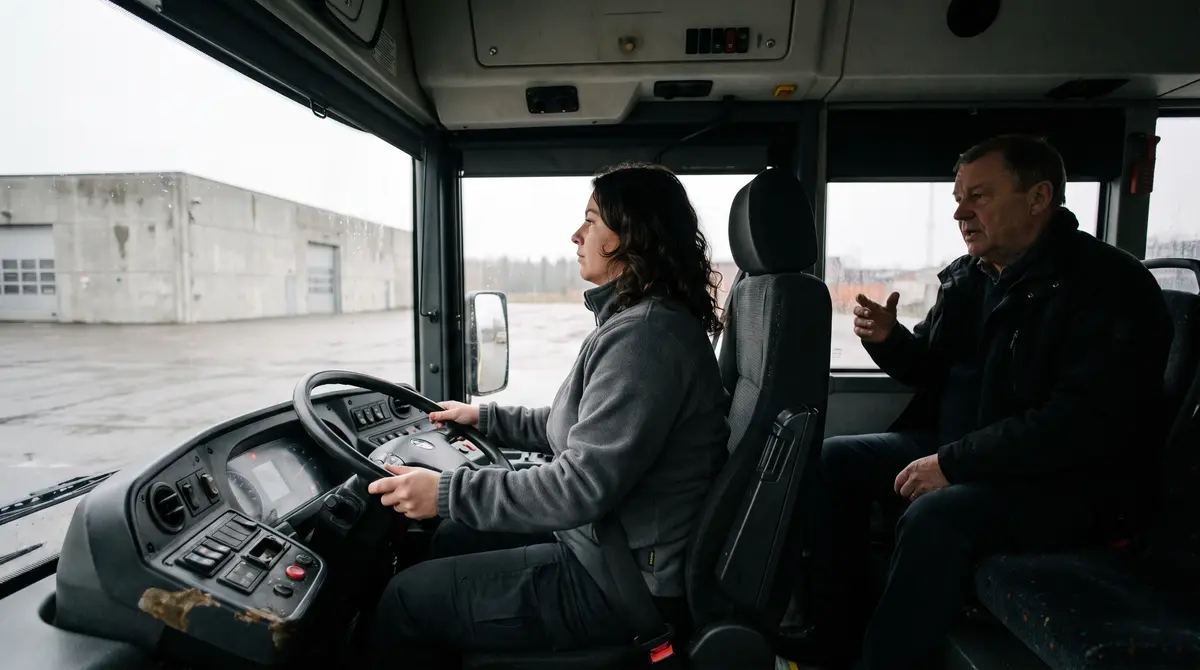
In the article Utbilda dig för jobb (Train for a job) from 2 September 2026, Arbetsförmedlingen (the Swedish Public Employment Service) notes that there is a big shortage of staff in several industries, even though many people are unemployed. It names bus and truck drivers, sheet metal workers, cooks, and health and social care as examples of occupations and industries that lack properly trained staff.
The message is simple: if you have applied for many jobs in your field for a long time without success, it may be a good idea to change track. Arbetsförmedlingen’s own follow-up also shows that labour market training (arbetsmarknadsutbildning) has improved people’s chances of a job in a lasting way, and that it has worked well for people born outside Sweden and for the long-term unemployed. One key to success is to train for occupations where demand is high.
Signs that it may be time to change track
More applications are not always the whole answer. Look at how your job search has gone recently. If you recognise yourself in any of the following, education may be worth talking about:
- You have applied for many jobs in the same occupation for a long time, but you are rarely called to an interview.
- The job adverts you apply for require an education, a driving licence or a vocational certificate that you do not have.
- There are few vacancies in your occupation where you live, but many in a related occupation.
- You have an education from abroad or long experience that does not show in your CV. Then validation (validering) can be a first step, before you start again from the beginning.
- You are told that you came close, but that someone else had the right education.
Occupations that need trained staff
Arbetsförmedlingen’s occupational barometer (yrkesbarometer) from June 2026 assesses how good the chances of a job are in different occupations. This is how it looks in Västra Götaland for the occupations in the article:
| Occupation | Job opportunities in Västra Götaland |
|---|---|
| Truck drivers | High |
| Cooks | High |
| Vehicle and thin sheet metal workers | High |
| Building and ventilation sheet metal workers | High |
| Bus and tram drivers | Medium, and demand in Sweden as a whole is expected to increase over the next five years |
| Assistant nurses | Medium, and demand is expected to increase over the next five years |
Choose your occupation carefully. The same assessment says, for example, that job opportunities for care assistants are low in Västra Götaland, while they are better for assistant nurses. Arbetsförmedlingen’s list Här finns jobben just nu (Where the jobs are right now) shows more occupations with good chances. If you are thinking about driving a bus or a truck, we have written a separate guide on training to become a bus or truck driver.
Short and longer education routes
Education does not have to mean several years at a school desk. Here are the routes, roughly from shortest to longest:
Validation: get what you already know assessed
In a validation, the knowledge you have gained through studies, work or everyday life is assessed, and you get a certificate or grades that make it formally recognised on the Swedish labour market. It takes from a few days up to a few weeks. If something is missing, you can get recommendations on what you need to add.
Study motivation class at folk high school
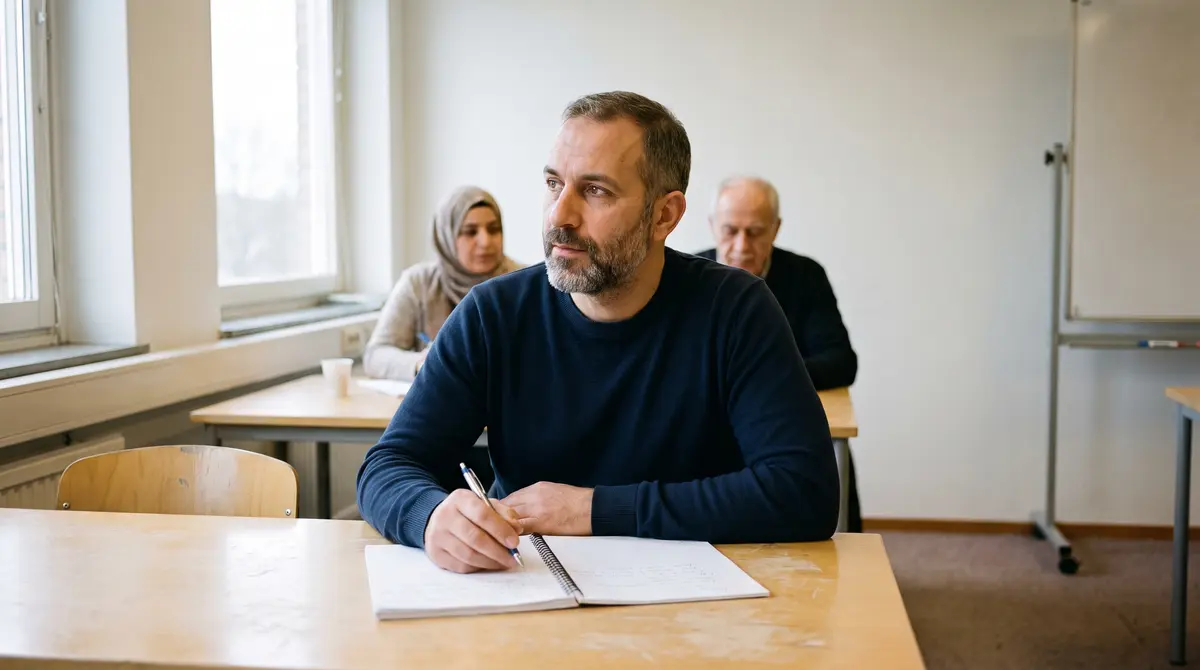
This is for people who do not have an upper secondary school diploma. The course (studiemotiverande kurs) is full-time for three months and trains study skills, Swedish, English, mathematics and social studies. Afterwards you can go on to municipal adult education (Komvux) or a general course at a folk high school. In Gothenburg it is offered at several folk high schools.
Labour market training
A shorter vocational training programme that you take through Arbetsförmedlingen, in occupations where many employers are looking for staff. It is full-time and usually not longer than one year. To take part, you must be registered with Arbetsförmedlingen and have turned 25, or have turned 18 and be assessed as being far from the labour market. There are also exceptions if you are under 25 and have a disability that affects your ability to work.
At the end of September 2026, the programmes in Gothenburg included training for truck drivers, restaurant and large-scale catering with a specialisation as a cook, building sheet metal workers and care assistants. The selection changes all the time, so search for yourself in Arbetsförmedlingen’s tool Hitta arbetsmarknadsutbildning (Find labour market training).
Komvux and yrkesvux
Municipal adult education is free of charge, although you may need to pay for work clothes and materials. In the Gothenburg region, you apply for vocational adult education (yrkesvux) via GRvux, about three months before the start. The fields include vehicles and transport, restaurant and food, health and social care, construction and industry.
Higher vocational education
Post-secondary vocational programmes at a higher vocational education institution (yrkeshögskola, YH) that are often one to two years long, with a work placement at a workplace. Most are free of charge and qualify you for student finance (studiemedel). There are also short YH courses of five to ten weeks for people who already have a vocational education as a foundation.
Training with a salary
Some employers train people themselves and pay a salary in the meantime. In Gothenburg, Göteborgs Spårvägar offers eight weeks of paid training to become a tram driver. In the electrical and ventilation industries, for example, you can become a company apprentice (företagslärling), employed from the first day.
Money in the meantime: activity support, CSN or salary
How you get money depends on which route you choose. There are three different arrangements:
| Arrangement | Money in the meantime | Who decides |
|---|---|---|
| A programme through Arbetsförmedlingen, for example labour market training, validation or a study motivation class | Activity support (aktivitetsstöd), development allowance (utvecklingsersättning) or introduction benefit (etableringsersättning) from Försäkringskassan (the Swedish Social Insurance Agency). Activity support is SEK 365 per day, or up to SEK 1,236 if it is based on your previous income. | Arbetsförmedlingen |
| Your own studies at Komvux, yrkesvux or a higher vocational education institution | Student finance (studiemedel) from CSN (the Swedish Board of Student Finance): SEK 1,030 in grants and SEK 2,368 in loans per week of full-time study (2026). Some people can get a higher grant. | You apply yourself, CSN decides |
| Employment with training, such as paid training, an apprenticeship or an introductory job | Salary from the employer | The employer (for introductory jobs, also Arbetsförmedlingen) |
In some cases, Arbetsförmedlingen can decide that you may study at basic or upper secondary level for up to one year with activity support instead of student finance. That is their assessment, based on whether the studies bring you closer to a job.
Three things to know before you apply
- A-kassa and studies usually do not go together. The main rule is that you cannot study and get benefits from your unemployment insurance fund (a-kassa) at the same time. Talk to your a-kassa first.
- You cannot get activity support and student finance for the same period.
- The study start support (studiestartsstöd) no longer exists. It was abolished on 1 January 2026.
If you take part in a programme, since 1 June 2026 you can also lose your compensation immediately if you do not apply for an education that Arbetsförmedlingen has told you to apply for. So keep track of what your action plan says.
Questions to take to Arbetsförmedlingen and your coach
Before you decide, take these questions to your next meeting:
- Which occupations have good chances of a job here, based on what I already know?
- Can I get my education or experience validated first?
- Is labour market training an option for me, and which programmes are there in Gothenburg right now?
- Can I study with activity support, or do I need student finance from CSN?
- How are my a-kassa or my activity support affected if I start studying?
- Do I need a driving licence, a vocational certificate or Swedish at a certain level for the occupation?
- What happens to my support from Arbetsförmedlingen while I study?
Good to know
This is general information, not a promise of a job, a training place or compensation. Talk to Arbetsförmedlingen and your coach about the education routes and the conditions that apply to you before you apply.
If you take part in Prepare and Match
The goal of Prepare and Match (Rusta och matcha) is a job or education. Guidance towards a job or education is part of the support, and your coach can help you compare the routes, find the right education and send in your application.
We do not provide vocational training ourselves. If labour market training or validation would help you, we tell Arbetsförmedlingen, which assesses and decides. When you start studying, Arbetsförmedlingen normally ends your placement in Prepare and Match. You tell Arbetsförmedlingen yourself that you are starting to study.
Want to know more about the support? Read about Prepare and Match for job seekers or contact us.

We are a provider of Prepare and Match on behalf of Arbetsförmedlingen in Gothenburg. The text is based on the sources below and was updated on 27 September 2026. Rules can change, so always check your own case with Arbetsförmedlingen or Försäkringskassan.
Sources
The sources are in Swedish unless stated otherwise.
- Arbetsförmedlingen: Utbilda dig för jobb (publicerad 2 september 2026)
- Arbetsförmedlingen: Här är yrken där du får betalt under utbildningen (9 september 2026)
- Arbetsförmedlingen: Yrkes- och kompetensanalyser (yrkesbarometern, juni 2026)
- Arbetsförmedlingen: Här finns jobben just nu
- Arbetsförmedlingen: Kortrapport 2026:2, Insatser som leder till jobb
- Arbetsförmedlingen: Arbetsmarknadsutbildning
- Arbetsförmedlingen: Hitta arbetsmarknadsutbildning
- Arbetsförmedlingen: Studiemotiverande kurs på folkhögskola
- Arbetsförmedlingen: Validering
- Arbetsförmedlingen: Välj rätt utbildning
- Arbetsförmedlingen: Villkor när du har ersättning från a-kassan
- Arbetsförmedlingen: Ändrade regler för dig som deltar i Arbetsförmedlingens program (1 juni 2026)
- Arbetsförmedlingen: Introduktionsjobb
- CSN: Hur mycket pengar kan jag få eller låna när jag studerar?
- CSN: Högre bidraget för vissa studier
- SFS 2025:1545: Lag om upphävande av lagen om studiestartsstöd
- Göteborgs Stad: Om yrkesutbildning och hur du söker
- Myndigheten för yrkeshögskolan: Studiemedel och studieavgifter
- Förordning (2017:819) om ersättning till deltagare i arbetsmarknadspolitiska insatser
- Arbetsförmedlingen: Förfrågningsunderlag Rusta och matcha 2